EKOW

A place for our histories.

Ekow is a platform for communities whose histories have been shaped by colonialism, migration or diaspora. It helps them preserve, describe and share their own archives.

Families, associations, collectives, foundations and institutions use Ekow to bring together photographs, documents, oral histories, audio and video recordings, and other archival material. They describe their records in their own words and contexts, and decide how their histories are represented and who gets to see them.

Join the pilot
Why Ekow exists

Much of what has been preserved about our communities was collected and described by others, often from perspectives that were not our own. Much more remains in homes, community spaces and institutional collections, with its stories held by the people who know it.

We believe communities should have the means to preserve and describe their own archives. This includes deciding how people, places and events are named and understood, and which perspectives are represented.

We believe communities should own their archival material and the data connected to it. They should also have a say in the technologies used to preserve their histories, and in how those technologies develop.

Managing your archive with Ekow

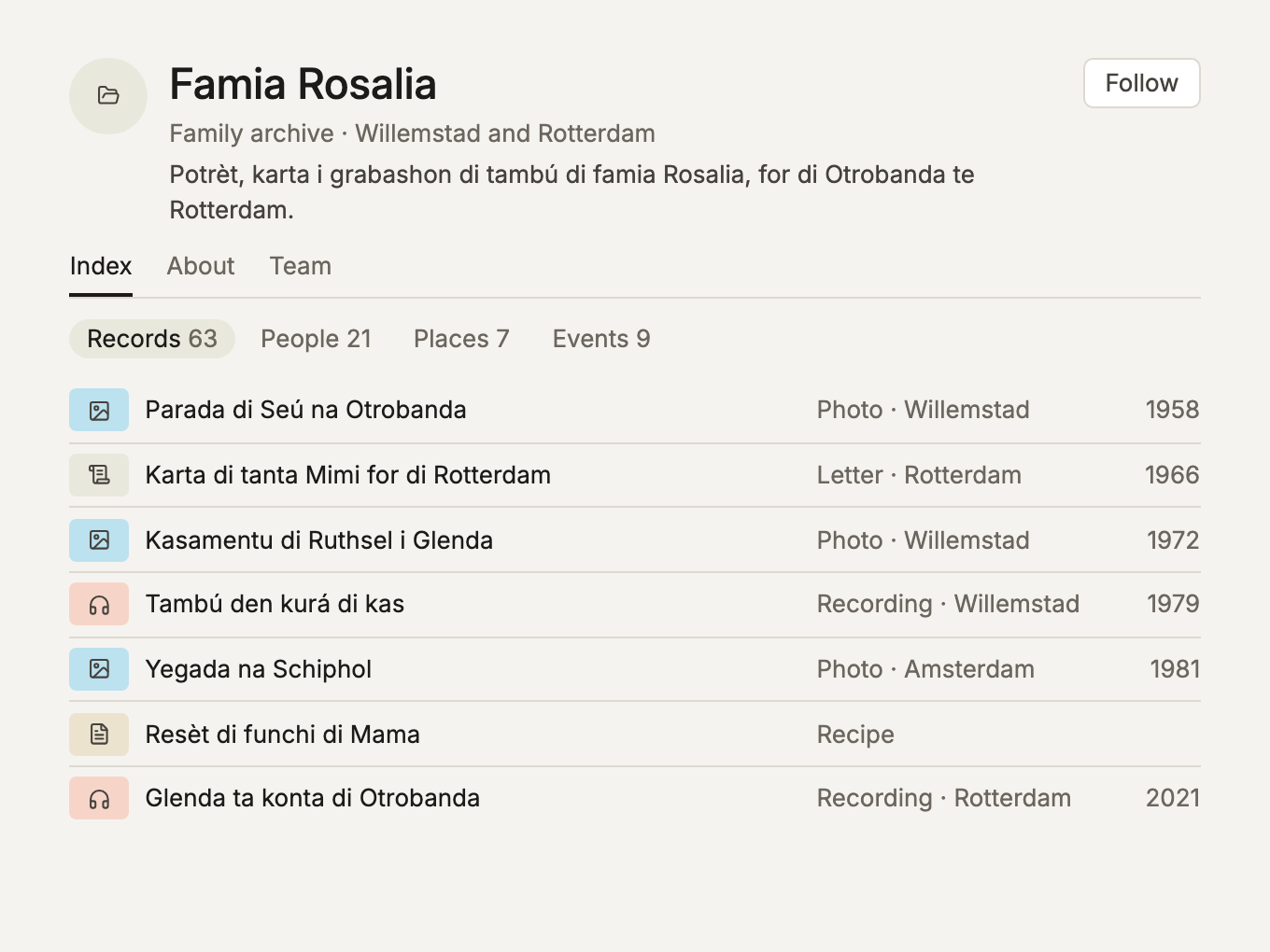
Bring your photographs, documents, oral histories, audio and video recordings, and other archival material together in Ekow. Describe and organise records, add information about the people, places and events connected to them, and work on your archive with others. Your archive can grow over time as new material is created, found or contributed.

Famia Rosalia in Ekow: a family archive with photos, a letter, tambú recordings and a recipe, each with its kind, place and year.

The archives in these pictures are examples. Their names and records are made up.

Connecting archives

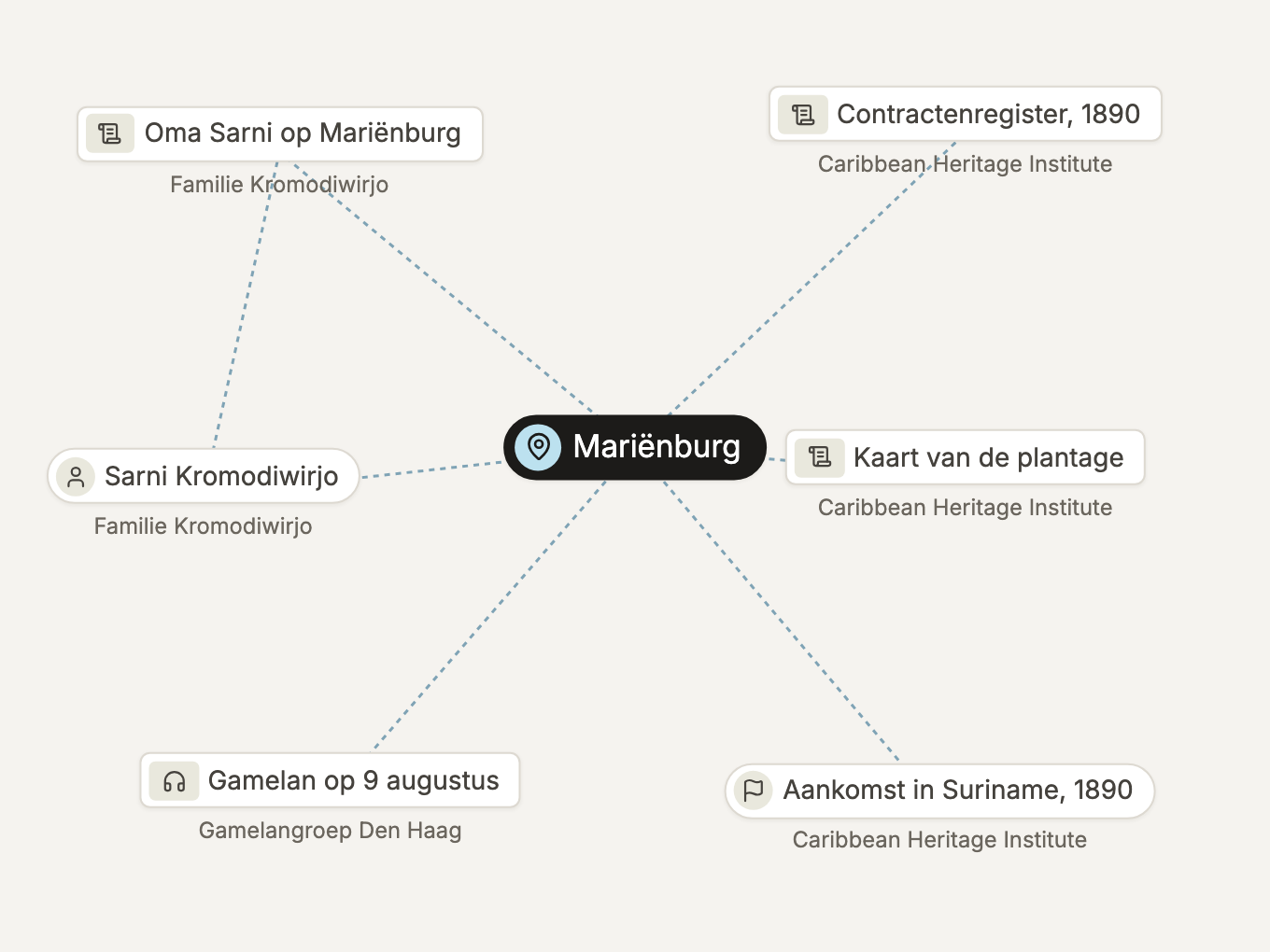
Ekow brings connections together across archives, so that a person, place or story can be found in more than one place. Each archive controls the visibility of its own material and decides what can be seen by others.

The Mariënburg plantation connected to records of a Javanese Surinamese family, an institute and a gamelan group: a photo of a grandmother, a register of contracts, a map, a gamelan recording and the arrival in 1890.

Different perspectives and accounts

History is not always told in the same way. A personal account may differ from an institutional record. Both have a place in Ekow.

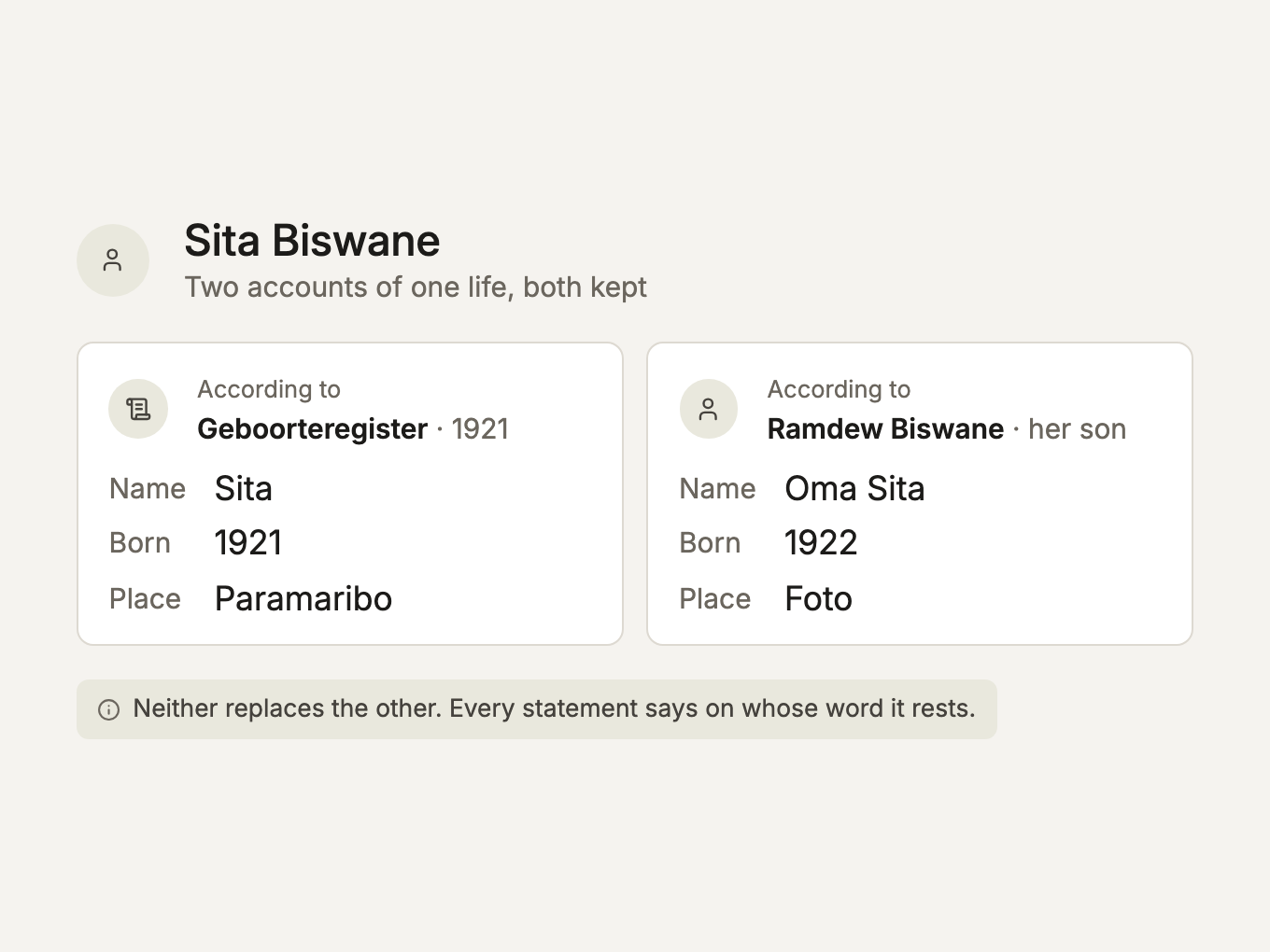
Every description keeps track of who provided it and where it comes from. Different accounts can exist side by side, without one replacing the other. Communities decide which names and terms to use when describing people, places and events. These may differ from the names found in dominant historical sources.

Two accounts of Sita Biswane side by side: the birth register says Sita, born 1921 in Paramaribo; her son Ramdew says Oma Sita, born 1922 in Foto.

Control over your archive

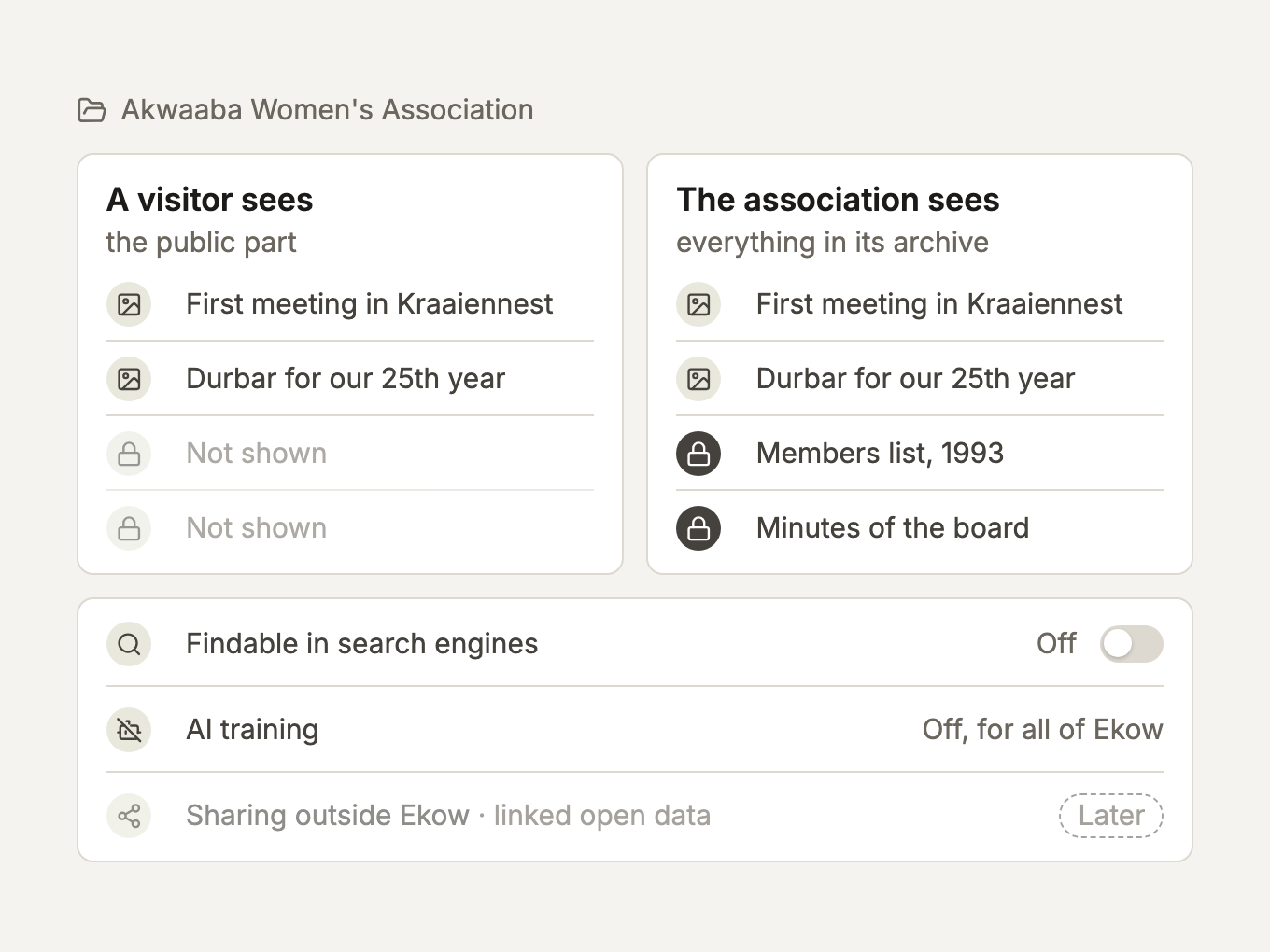
Each archive decides what to share and with whom. Information about living people is private by default. You can set visibility for your entire archive or for individual records.

We also ask AI companies not to use Ekow's content to train their models.

In the future, we want archives to be able to share selected information with museums, libraries, research institutions and other archives outside Ekow. The people managing each archive will decide what is shared and with whom.

What a visitor sees next to what the association sees: the members list and the board minutes only in the association's view. Below: findable in search engines off, AI training off for all of Ekow, and sharing outside Ekow, which comes later.

Files and physical records

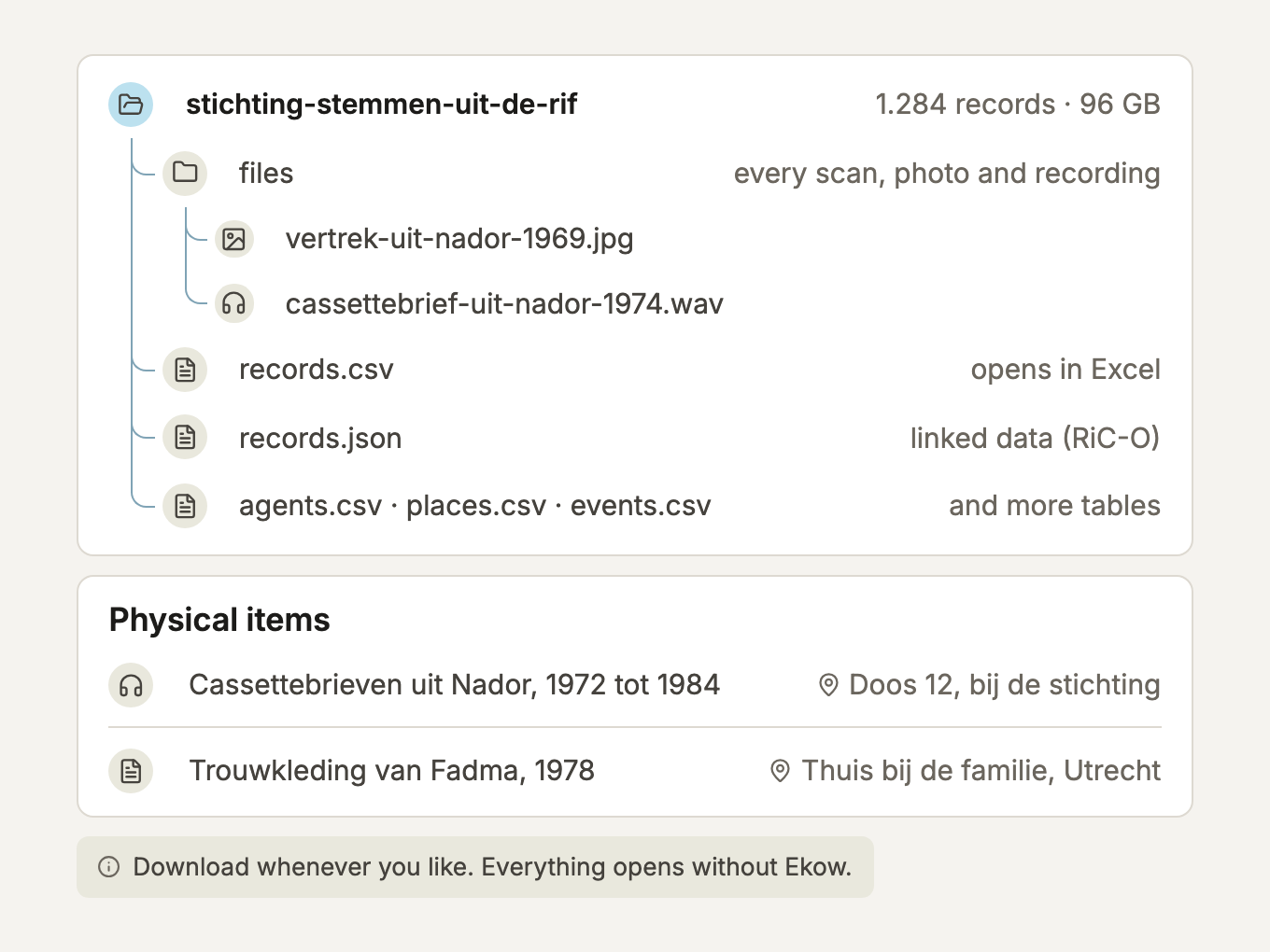
You can download your complete archive, including your files and descriptions, whenever you want. You can keep it or use it with other tools.

Physical originals can stay where they are. Ekow helps you document and keep track of where they are held.

The export of an Amazigh foundation's archive as a folder with its files and tables, and where two physical items are kept: at the foundation and at home with a family.